

As a pickleball enthusiast always on the lookout for ways to enhance my practice, I recently had the opportunity to test a portable pitching machine designed for hitting practice. My primary goal was to improve my hitting accuracy and build visual acuity, especially as I play regularly and often practice alone. Given the lightweight and portable nature of this machine, I was eager to see how it could fit into my training regimen.
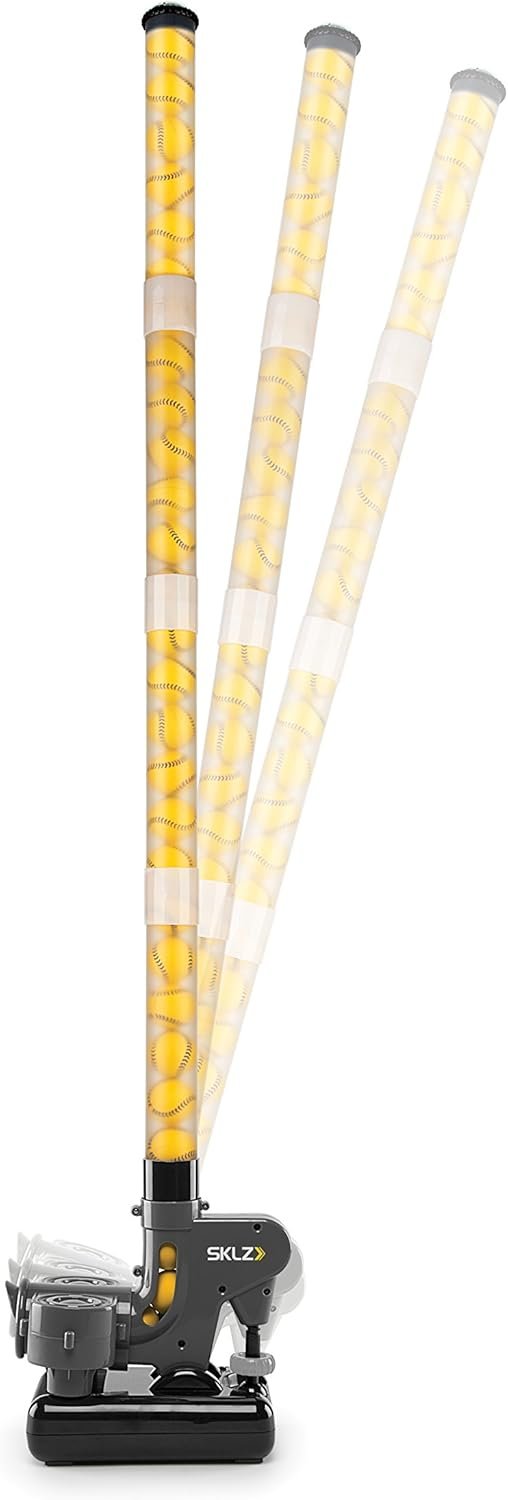
Right off the bat, one of the standout features is its ability to automatically pitch soft practice balls at about 30 mph, which is perfect for honing hand-eye coordination. The machine promises a 5-second delay between pitches, allowing players the chance to reset and prepare for each hit. This feature definitely came in handy during my solo sessions. However, I found myself wishing for more consistent pitching—something many users echoed in their reviews.
Pros and Cons
Pros:
- Portability and Ease of Use: The machine is incredibly lightweight, making it easy to move around and set up wherever I wanted to practice. Whether in the backyard or indoors, I found it versatile enough to accommodate my training needs.
- Visual Acuity Training: The varying angles make it easy to adjust for different pitching locations, which kept my practice sessions dynamic. It certainly helped improve my visual tracking and swing timing.
Cons:
- Durability Issues: Several reviews raised concerns about the machine’s durability. Specifically, some users mentioned it stopping after about 40-50 balls or experiencing mechanical failures, which resonates with my experience. After about 60 pitches, the machine was noticeably struggling and showed signs of wear.
- Pitching Inconsistencies: The pitches sometimes lacked the distance and stability I’d hoped for. The machine promoted a "soft toss" environment, but more often than not, it felt inconsistent—especially when I was anxious for sharper, more game-like scenarios. This aspect aligns with feedback from users who found the variability unhelpful when trying to replicate real-game situations.
Many users noted that while the product is effective for backyard training, the build quality could use some improvement. I can vouch for the fact that mine exhibited some hiccups in reliability. For instance, after a couple of sessions, I noticed one of the pitches started to veer off course, inconsistent with the quality I was expecting.
A bright side, as pointed out by another user, was that it was great for hand-eye coordination training, much like what Dr. Dizzler mentioned in his review. This made me realize that, in many ways, this machine serves as a good intermediary between traditional batting cages and casual backyard practice, even if it doesn’t perfectly replicate a pitching machine’s consistency.
Conclusion
Overall, I would rate this pitching machine at around 3.5 stars. It certainly has its perks, especially for casual training and improving visual skills. However, it’s essential to go into the experience with the understanding that there may be variability in performance, especially regarding durability. While I initially had high hopes for my long-term use of this machine, I ended my practice session feeling a bit lukewarm about its longevity.
If you’re working on your technique and looking for a budget-friendly option to heighten your practice sessions, this machine may still be worth considering. Just be prepared for some of the quirks and handle it with care to maximize its lifespan. If you require something more robust for intensive training, you might want to explore higher-end models. For now, I’ll be incorporating this into my routine, albeit cautiously and with the expectation to keep a close eye on its performance over time.
Get ready to elevate your game with the SKLZ Pitching Machine! >>


